This page is part two of a journey to develop a better fitting room. Click here to read the first part of the story.
"How might we help Rob find the right match?"
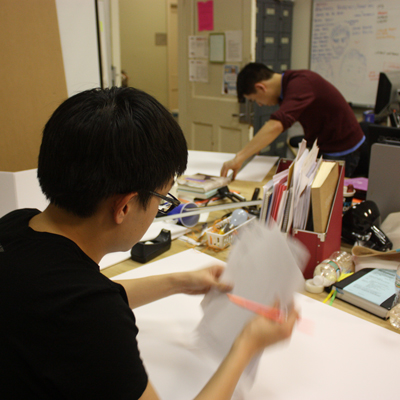
We started with Rob's problem as a source of inspiration for our ideation. Addressing some of Rob's barriers, we generated ideas that could help him in the beginning of the shopping process, all the way to matching clothes in his closet.
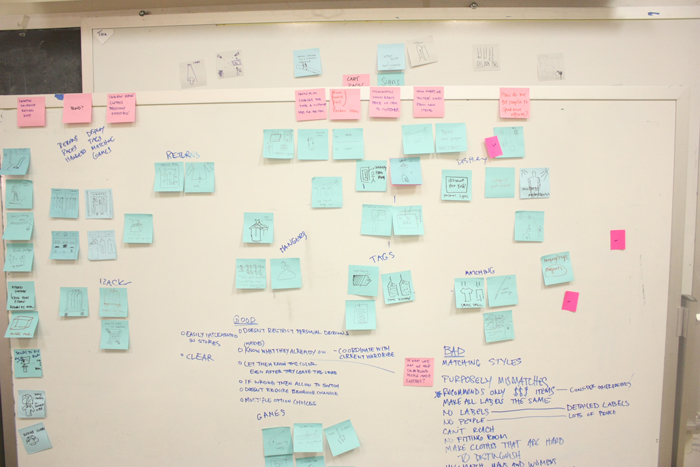
We grouped ideas that had commonalities and teased out some of the criteria aid us in our concept development. Our criteria focused on what our final product needed to have in order to be successful, not only for someone like Rob, but for all types of guys.
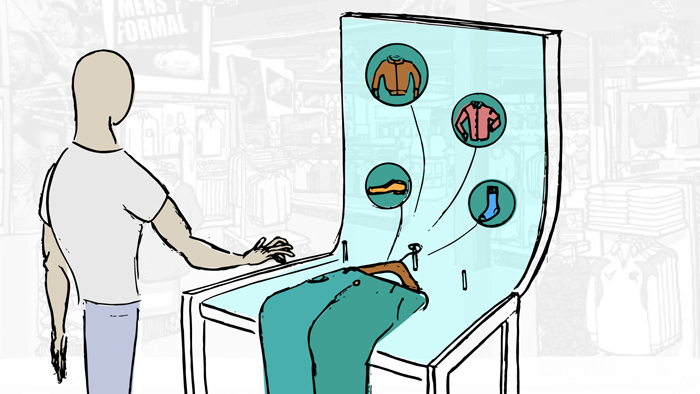
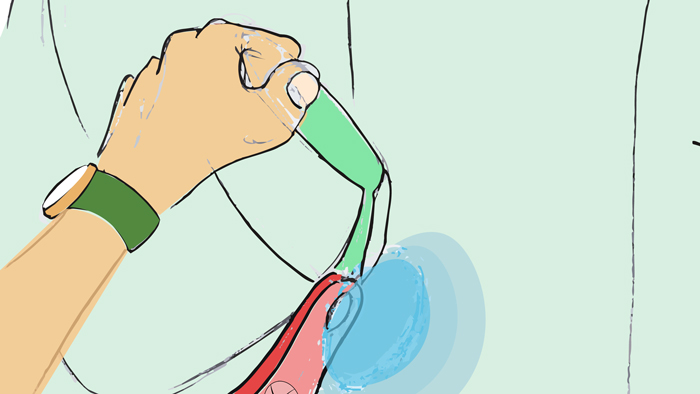
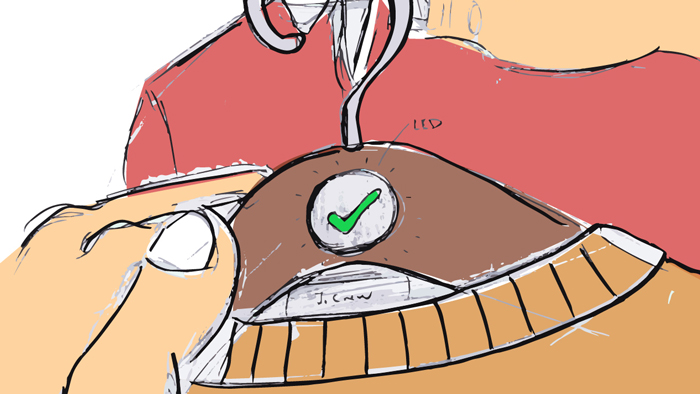
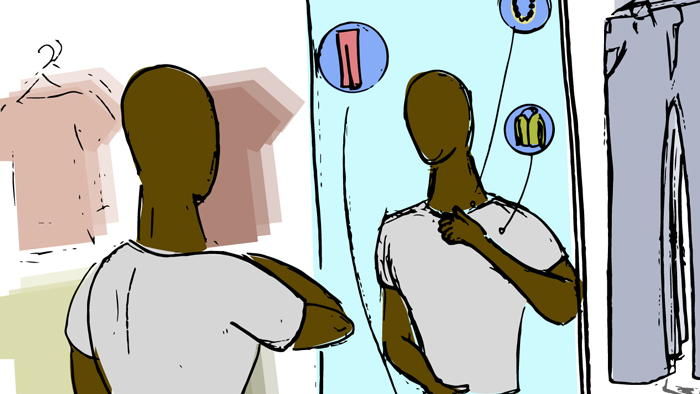
Our four concepts stemmed from the ideation session we had earlier, but focused on different ways we could create solutions within the space of our criteria. Our concepts included a information table that could sense the product and offer suggestions, smart tags that could locate other similar items in the store, hangers that would let you know if other items matched, and a mirror that identified what went with your current outfit.
With these four concepts, we sought the feedback from some of our target customers, guys
We spoke to six guys and listened to what they said about our concept scenarios and the most compelling concept was the fitting room. Guys like the potential of the fitting room to fit to their own needs, something analogous to their smart phones. And though they preferred suggestions, they didn't want their lack of knowledge broadcast to the rest of the store.
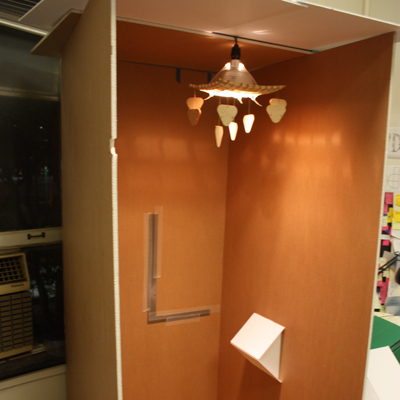
Our next step was to consolidate what we heard from the feedback about the fitting room and translate those needs into criteria, and subsequently into features of our product. Through this we test We working on designing how the fitting room may look from a technology perspective, as well as a design perspective. Our next steps include testing the interface and screen flow, and then testing the experience in the mock fitting room. Stay tuned for our next steps!
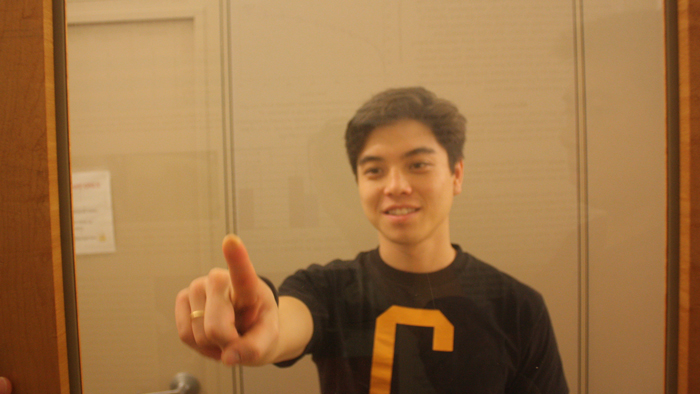
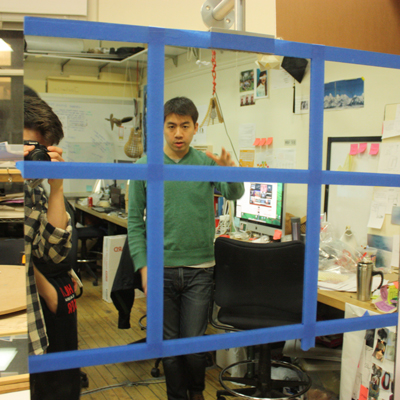
Renders and sketches are easy, but now it came to the challenge of actually constructing both the data, the back-end system, and the interface of the touch screen mirror.